A Permanent Material
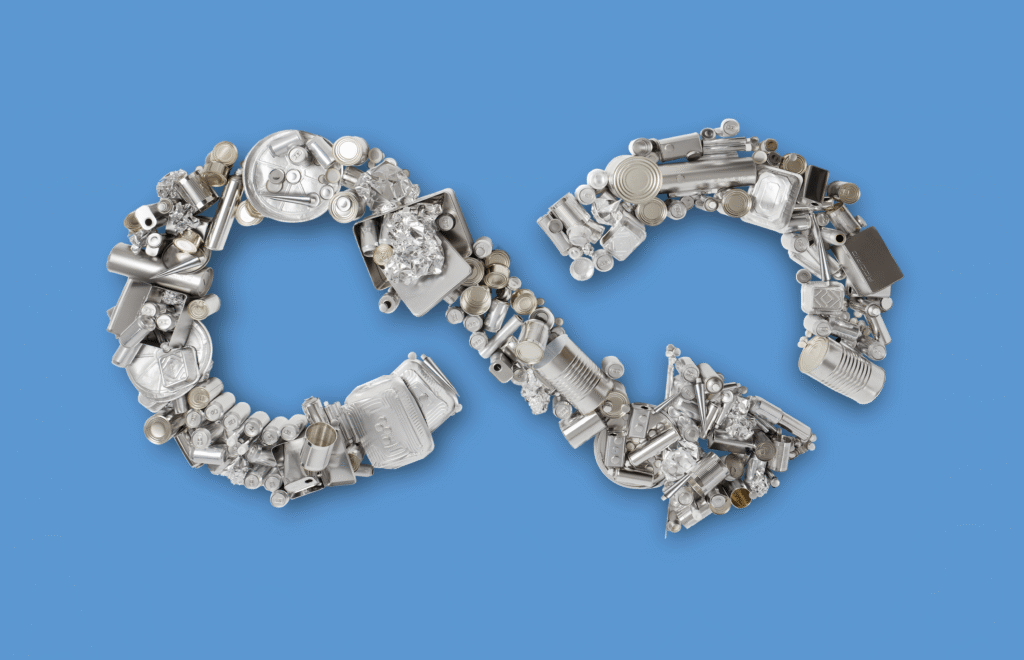
Metals such as aluminium and steel are permanent materials. A ‘permanent material’ is a material whose inherent properties do not change, regardless of the number of times it goes through a recycling process.
Once produced for the first time and properly collected and processed at the end of its life, it becomes a raw material for new and endless production loops. Such materials will remain at the heart of any proven and well-functioning circular economy
Over the past 100 years.
Over the past 100 years, we have developed ever more complex materials; this complexity and diversity has made recycling increasingly challenging. Permanent materials consist of robust chemical components to make multiple recycling possible: after use, permanent materials go back to their roots as a raw material for new uses.
- Permanent materials are not consumed, they are merely used.
- Permanent materials are moved from the ground or manufactured and used in a range of applications and then ’lent’ to other applications after their previous use.
- They can be recycled, over and over again, without loss of properties.
It’s elementary.
Aluminium and iron are an element of the periodic table. When scrap is melted to be recycled, it will be identical to primary Aluminium or Iron..

Today, it is estimated that up to 75% of all aluminium and steel ever produced is still in circulation. Metal recycling facilities are financially viable because they accept a wide range of materials.
This well-established recycling infrastructure has contributed to high recycling rates for metal packaging (82% for steel packaging and 75% for aluminium beverage cans in Europe).
%
Percentage of aluminium and steel ever produced still in circulation today
%